



Let’s be real – a lot of marketing efforts are aimed at Millennials, and figuring out how to appeal to Gen Z has become a big priority for many marketers lately. Yet beneath the surface lies a group with immense purchasing power and strong brand loyalty. Gen X email marketing is less about chasing trends and more about getting the fundamentals right – clear value, consistent messaging, a stable brand, and communication that respects the reader’s time.
While younger audiences may dominate social media conversations, Generation X remains a cornerstone of consumer decision-making, often shaping purchases not just for themselves, but for entire households. In fact, their purchasing power is said to be on the rise for many years to come.
That’s why we’re dedicating this article to this often overlooked but highly influential audience. Along the way, we’ll explore how to craft emails that truly resonate with them.
Who Are Generation X?
Generation X typically refers to individuals born between 1965 and 1980, placing them at roughly 46 to 61 years old in 2026. While this group is smaller than Millennials and Gen Z, they are considered the most influential generation in terms of purchasing power, largely due to their financial stability and life stage.
Some nicknames for Generation X include:
- Forgotten Generation – They fall between the much larger Baby Boomer and Millennial cohorts. The term also reflects how they often received less media and marketing focus and cultural spotlight during their formative years, coming of age in a comparatively quieter period between the Boomers’ major social movements and Millennials’ rapid technological change.
- Latchkey Generation – A nod to their more independent upbringing than earlier generations, as many grew up in dual-income households and regularly let themselves into empty homes with their own key (hence “latchkey”), managing their own after-school time and caring for themselves.
- Sandwich Generation – Reflecting the dual role of caring for both children and aging parents (it’s important to note that this is a shifting nickname, with every generation eventually taking it on).
Gen X’s unique life position gives them significant economic influence. Right now, these consumers are not only spending on themselves but also making decisions for multiple generations.
While Boomers may still hold the title of the ‘wealthiest generation’ thanks to decades of accumulated assets, Generation X is the one actually opening their wallets. With years of work experience under their belts, many have reached their peak earning potential, making them one of the most reliable consumer groups today.
What Does the Data Show?
- The parents of Generation X (mostly Baby Boomers, with some from the Silent Generation) are generally in their 60s to 90s, while the children of Gen X are, on average, 17–30 years old worldwide. In Europe and North America, the typical range is slightly narrower at 15–30 years old.
- Generation X currently numbers about 1.4 billion people globally – roughly 16–17% of the world’s population – and, combined with their peak earning and family responsibilities, makes them a highly influential consumer segment.
- According to the World Economic Forum, the ‘Gen X decade’ began in 2021, when Gen Xers started leading global consumer spending.
- It’s predicted that by 2035, global Gen X spending will climb as high as $23 trillion.
- And finally, maybe the most important stat for us here: around 80% of Gen Xers prefer email marketing as a communication channel.
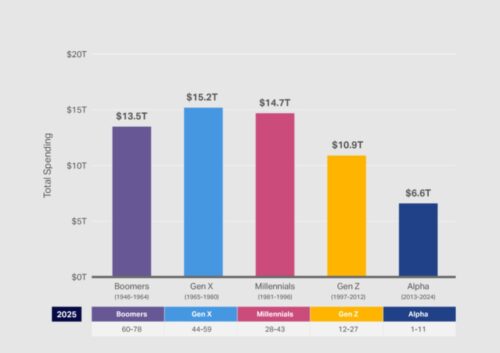
With all these statistics and traits in mind, it’s clear that Gen X may be the most influential generation in today’s marketplace. So let’s explore how to connect with them genuinely and effectively.
| 🤔 Does your target audience lean younger?
If you want to reach people in their 20s, then get valuable tips from our article “Gen Z – Does Email Marketing End With Them?”. Spoiler: the claim in the title gets debunked. |
What Defines Gen X as Consumers?
To market to Generation X, it’s important to understand what shaped them.
Growing up during rapid technological change – from analog childhoods to digital adulthood – Gen X developed adaptability without becoming overly dependent on trends. They experienced the rise of the internet, but also remember life before it. This creates a balance: they are digitally competent but not digitally saturated.
Psychologically, they tend to value and lean towards:
- Independence and self-reliance
- Pragmatism and realism
- Trust and consistency
- Efficiency over hype
Their “sandwich generation” role also influences their behavior.
They often manage:
- Household finances
- Children’s needs (education, lifestyle, tech)
- Aging parents’ care and expenses
This results in a consumer who is:
- Time-conscious
- Value-driven
- Selective in brand engagement
At the end of the day, Gen X makes decisions with a clear head, balancing practicality, loyalty, and long-term value for themselves and those who depend on them.

A Sidenote: Cultural and Regional Context Matters
While generational traits provide a useful framework, it’s important not to overgeneralize.
Much of what we “know” about Generation X is rooted in U.S.-based research, but it’s worth pausing to question how universally those insights really apply. Cultural context plays a far greater role in shaping consumer attitudes than generational labels alone might suggest.
Consider the cultural forces linked to Gen X in the U.S. – the rise of MTV, early-90s movements like the Seattle grunge explosion, the emergence of hip-hop and alternative rock into mainstream popularity, and broader shifts in consumer culture. These are often treated as defining experiences of the generation. Yet across other continents, the same trends did not necessarily emerge with the same intensity, timing, or meaning. In some places, they remained niche; in others, they were filtered through entirely different cultural lenses, or didn’t take hold at all.
If we look further back, the contrast becomes even clearer. Many Western Baby Boomers came of age riding the breeze of the hippie era and other countercultural movements of the late 1960s. But those same vibes were far less accessible or even actively suppressed in other parts of the world, such as Asia or the Soviet Union. So when we try to apply a single generational story globally, we risk projecting a very specific cultural narrative onto audiences whose lived experiences may have been completely different.
A Gen X consumer in Estonia, Germany, or Japan may share core traits such as independence and financial responsibility, but their cultural references, brand perceptions, and purchase triggers can differ significantly.
This is where geotargeting in email marketing becomes essential.
Tailoring campaigns based on location allows brands to:
- Adjust messaging tone and references
- Highlight regionally relevant offers
- Reflect cultural expectations and norms
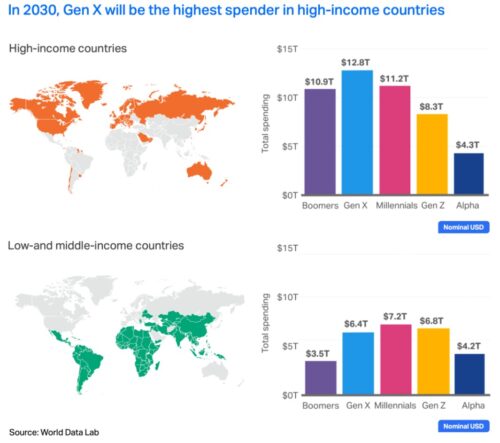
For global brands, the key is to focus on what unites Gen X across regions – such as their preference for trust, clarity, and value – while adapting the surface-level execution to local audiences.
| 🌍 To learn more about adapting campaigns globally, check out our 2-part series: |
What Marketing Style Works for Gen X?
1. Email First, Always
As shown earlier, Gen Xers favor email marketing as their main way to interact with brands, making it the most trusted touchpoint. Unlike younger audiences, they are less likely to interact deeply with brands on social media. However, they are not completely disconnected – besides actively engaging with traditional media, they use social media selectively, which makes multichannel marketing essential to reach them effectively.
Research shows that 55% of Gen Xers research products online before buying, a higher share than younger generations. This means that while email remains central, having a presence across other channels is important, as they often check reviews, seek recommendations, and compare options online before making a purchase. Including product recommendations within emails can increase engagement and conversion.
In short, reaching Gen X works best through a strategic mix: prioritize email as the core channel, but support it with social media, online research touchpoints, and traditional media, reflecting the channels they naturally interact with.
2. Build and Maintain Trust
They are highly responsive to brands that “earn” their loyalty over time. In fact, about 70% of Gen Xers are brand loyal, with a particular preference for established brands. By contrast, Millennials show roughly 60% loyalty but are more open to switching brands, while 50% of Gen Z tend to favor brands that align closely with their personal values.
For marketers targeting Gen X, this means emphasizing stability, reliability, and the quality of your company, products, or services – traits that mirror the feel of a trusted, established brand.
Highlight aspects such as:
- Proven performance
- Customer satisfaction
- Long-term reputation
- Professional credibility
Ultimately, building trust with Gen X isn’t about flashy trends or short-term hype – it’s about demonstrating consistency, transparency, and reliability, which encourages loyalty over time.
3. Focus on Value, Not Just Price
Although Gen Xers are not the most budget-conscious generation, they do actively look for deals.
The key is positioning your offerings to emphasize value over gimmicks:
- Highlight quality and longevity
- Emphasize cost-effectiveness over time
- Offer meaningful promotions, not short-lived or flashy discounts
Research shows that over half of Gen Xers prefer to pay more for a brand they trust rather than risk a cheaper, own-label alternative. They are also 13% more likely to use loyalty programs than the average consumer.

| 🟣 Pro Tip! Gen X highly values good customer service and helpful support. Providing attentive, reliable service not only meets their expectations but also reinforces trust and strengthens brand loyalty over time. For this generation, a positive service experience can be just as influential as product quality in shaping long-term loyalty. |
4. Appeal to Real-Life Needs
Gen X might not be as focused on big-picture or global issues as younger generations – for example, only about 45% say sustainability influences their purchases, compared to 60% of Millennials and 80% of Gen Z. Their focus is more on practical, real-life, and straightforward needs that directly affect themselves and their families, such as:
- Family and household solutions
- Health and well-being
- Financial planning and security
- Convenient services that save time (!)
In short, while they are certainly aware of broader trends and topics, Gen X makes decisions primarily based on household and personal priorities rather than social or environmental concerns.
At the same time, they are not unfamiliar with technology trends, with research showing that their interest in the latest tech news is the same as Gen Z’s (37%). Nearly half of Gen X is excited about AI, and smartwatch ownership rose 34% between 2021 and 2024 amongst this generation.
Maybe Gen X’s interest in new technology stems from its novelty and their continued ability to adapt and learn, while Gen Z seems to be emotionally shifting away from the gadget world, seeking more “natural” experiences for a change. In conclusion, this highlights Gen X’s enduring adaptability and openness to change.
5. Use the Right Tone
When communicating with Gen X, it’s important to strike the right balance. The tone should be respectful – avoid being too casual or overly familiar, as Gen X values professionalism and clear communication. It should also be informative but not overwhelming, offering valuable insights without overloading them with excessive details.
Be direct and straightforward, steering clear of overly stylized language or jargon that may feel inauthentic. Gen X appreciates authenticity over forced humor or trendy phrases, so always aim for sincerity and clarity in your messaging.
Effective communication with Gen X should feel:
- Respectful, not overly casual
- Informative, not overwhelming
- Direct, not overly stylized
- Avoid overly trendy language or forced humor – authenticity matters more.
| 🟣 Pro Tip! Pay special attention to the order in which you present your message. When creating content for Gen X, lead with the main offer or benefit, then highlight practical advantages like convenience, time savings, or hands-on support. This order keeps your message clear, useful, and trustworthy, rather than pushy or cluttered. |
6. Leverage Nostalgia – Carefully
Nostalgia can be a powerful tool for connecting with Gen X, especially references to the 1980s and 1990s, when many were coming of age – think MTV, early video games, iconic movies, music, and pop culture trends. These touchpoints can create an emotional connection, reminding them of formative experiences and simpler times.
However, nostalgia should be used thoughtfully:
- Subtle and relevant – Tie it naturally to your product or message, don’t force it.
- Integrated into the message – Nostalgia should enhance, not dominate, the content.
- Consider your audience carefully – What’s nostalgic for Western Gen X may not resonate in other regions. For instance, referencing Friday night arcade trips might not quite work for the Gen X’ers living in Hiiumaa.
Done well, this approach can make marketing feel personable, relatable, and memorable without feeling gimmicky.
| 👉 Discover why nostalgia works and how to create this emotionally resonant content in our article “Nostalgia in Marketing & How to Use Warm Familiarity in Emails”. |
Campaign Examples: One Goal, Three Generations
Now let’s take a closer look at how the same campaign might differ across generations.
Company: A travel agency
Campaign Goal: Promote a limited-time travel package
🟣 Gen X Version
Subject line: “Plan a trip you’ll truly enjoy – exclusive offer inside”
Preheader: “Stress-free booking, quality stays, and flexible options await.”
Email content:
Focus on comfort, reliability, and value.
Highlight:
- Stress-free booking
- Quality accommodations
- Flexible options
Tone: Professional, reassuring
CTA: “Explore your options”
Send time: Morning or early evening
🟣 Millennial Version
Subject line: “Your next unforgettable experience starts here ✈️”
Preheader: “Discover unique destinations and create memories that last.”
Email content:
Emphasize:
- Unique, Instagram-worthy experiences
- Personal growth and adventure
Tone: Inspirational, engaging
CTA: “Start your journey”
Send time: Midday or evening
🟣 Gen Z Version
Subject line: “Hot travel drop 🔥 Don’t miss this!”
Preheader: “Trendy spots, limited-time deals, and social proof inside.”
Email content:
Highlight:
- Trendy, shareable destinations
- Social proof (reviews, influencer recommendations)
- Limited-time urgency
Tone: Casual, energetic
CTA: “Book now”
Send time: Late afternoon or night

Gen X Email Marketing Proves Its Value
Gen X may not dominate headlines, but they dominate decisions. With strong financial stability, high brand loyalty, and a clear preference for email communication, they represent one of the most valuable audiences for marketers today.
However, effective Gen X email marketing is not about relying solely on generational stereotypes. The most successful campaigns combine generational insight, individual segmentation, and cultural awareness.
In niche industries, especially, customer behavior may be shaped more by specific interests than by age group alone. That’s why it’s essential to go beyond broad labels and segment audiences based on what truly drives them – whether it’s sustainability, brand trust, deal-seeking behavior, or something that speaks to their desire for financial security and peace of mind for themselves and their families.
After all, the numbers speak for themselves: Gen X is anything but forgotten, quietly holding enormous influence over every decision and purchase. Ultimately, if you approach Gen X with respect, clarity, and relevance, they won’t just convert – they’ll stay.