



Winter has a way of making email marketing feel heavy. The same automations keep running. The same segments keep receiving. The same templates keep converting – well enough. The winter season may indeed be jolly for a while, but now is the time to prepare for when people really start to get pumped up – and to rethink your 2026 email marketing strategy before momentum shifts.
But the real opportunity for renewal isn’t in spring – starting then, you might already be late for the gig. It’s in the in-between.
That late-winter window – after the holiday rush, before spring campaigns officially launch – is your most strategic reset moment. While everyone else is planning floral promotions and “spring refresh” subject lines, you can be rebuilding the engine.
Here are fresh, less-talked-about ways to reset your email marketing before spring fully arrives.
1. Audit the Emotional Weather of Your Emails
Instead of reviewing metrics first, review tone.
Pull up your last 10 campaigns and read them back-to-back.
Ask yourself:
- Are we still in “holiday urgency” mode?
- Do our emails feel dense or heavy?
- Are we pushing people or guiding them?
Winter campaigns tend to lean into urgency, scarcity, and survival messaging (“last chance,” “don’t miss out,” “beat the cold,” etc.). But late winter is psychologically different, and it’s a traditionally slow period. Your audience is emerging from decision fatigue and budget fatigue. And actually fatigue from your emails (you can read about email marketing fatigue here).
Shift from:
- Pressure → Possibility
- Volume → Breathing room
- Hard CTAs → Curiosity CTAs
Think of this as emotional decluttering before tactical decluttering.
2. Prune Automations Like a Garden (Not a Spreadsheet)
Most marketers “optimize” automations by tweaking subject lines. Few step back and ask whether the automation still deserves to exist.
Before spring:
- Pause and reread every evergreen sequence.
- Remove one email from each flow.
- Combine two emails that feel repetitive.
- Add one “human” email with no CTA at all.
Automation creep is real. Just like gardens, flows overgrow. This kind of “pruning” improves performance not because you add more – but because you remove friction.

3. Create a “Warm-Up Campaign”
According to recent industry analysis, 73% of brands experience declining margins during the winter months, even as they increase promotional activity. More discounts. More urgency. More campaigns. Yet profitability often shrinks.
That’s why you shouldn’t jump straight into another spring launch. Instead, run a short re-engagement campaign that isn’t about selling – a warm-up campaign designed to gently reconnect with your audience after a busy winter.
You can give it a creative name:
- “Inbox Refresh”
- “Defrost Your Inbox”
- “End of Hibernation”
Here’s what it can include:
- A simple check-in email
- A preference update invitation
- A one-question survey/poll
- A “What do you want from us this year?” message
The goal isn’t immediate revenue. It’s restoring attention, engagement, and goodwill before promotional season begins again.
| ╰┈➤ To read more about how to ask your subscribers important questions, read our blog article Polls in Marketing Emails – the Power of Interest in Opinion. |
4. Redesign for Light, Not Trend
Spring is the perfect time to rethink the visual weight of your emails. Rather than chasing seasonal clichés, focus on making your content feel breathable and easy to engage with.
You might just:
- Increase white space by 20%.
- Shorten paragraphs.
- Use one hero image instead of three.
- Reduce font sizes slightly to create air.
- Replace heavy buttons with simple text links.
If winter emails felt layered and loud, spring resets should feel breathable.
Minimalism isn’t about an aesthetic trend – it’s about cognitive load. Even product-heavy brands like Everlane use space strategically to make email feel calm and premium.
And the latest Pantone selection (which often serves as a barometer of cultural shifts) reaffirms this movement towards a more airy, lighter design language, with Cloud Dancer as the color choice for 2026.
5. Re-Segment by Energy, Not Demographics
Most lists are segmented by:
- Purchase history
- Location
- Lifecycle stage
But what if you segment by engagement energy?
Create three dynamic groups:
- Highly active (clicked in last 30 days)
- Warm but quiet
- Dormant but not unsubscribed
A/B testing time!
Now test:
- Send high-energy campaigns only to high-energy subscribers.
- Send slower, story-driven emails to quieter segments.
- Send a “do you still want this?” series to dormant contacts.
You’re not just cleaning your list. You’re matching the rhythm.

6. Rewrite Your Welcome Series as If You Started Today
Imagine your company launched yesterday.
Would your current welcome flow still make sense?
Think about:
- Are you introducing outdated positioning?
- Are you referencing last year’s roadmap?
- Does your founder story still reflect reality?
Brands evolve quietly over winter. Your welcome sequence often doesn’t.
Before spring traffic increases, align your entry point with who you are now—not who you were when the automation was built.
7. Try a “Negative Space” Campaign
One of the most refreshing ways to reset is to send an email that breaks your own pattern.
A sprinkle of ideas:
- A plain-text letter from a team member
- A one-sentence email
- An email with only a single image and no copy
- A “no promotion this week” message
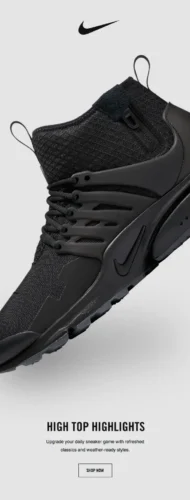
In a crowded inbox, restraint stands out.
When brands like Patagonia send minimal, mission-driven emails, they often generate outsized engagement because they contrast with the noise.
Your version doesn’t have to be political or bold – just different from your own norm.
8. Refresh Your Subject Line Strategy (Without Trends)
Instead of chasing seasonal emojis and spring clichés, audit your subject lines for:
- Repetition
- Length uniformity
- Overused power words
Then test:
- All lowercase subjects for a month
- Sentence-case only
- No punctuation
- No emojis at all
- 2–3 word subjects exclusively
Winter inboxes are loud. Spring inboxes are crowded. Pattern interruption matters more than hype.
9. Clean Your Data Like You Clean Your Closet
Before spring campaigns go out, it’s worth taking a hard look at your mailing list. Just as you might declutter your closet to make room for new pieces, your subscriber list can benefit from a little pre-season cleaning.
Indeed, the writer hereby knows that parting with cherished and rare wardrobe items and loyal subscribers can feel just as difficult as bidding farewell to old friends. However, trust me – ultimately, it leads to positive outcomes for everyone involved.
Before launching new campaigns:
- Remove cold subscribers who haven’t engaged in 6-12 months.
- Suppress frequent complainers.
- Check for duplicate contacts.
- Review deliverability trends.
Think of this as your pre-spring cleaning.
A leaner list often outperforms a larger one. Deliverability improves. Engagement rates rise. And your campaigns hit warmer inboxes.
| ╰┈➤ To learn all you need to manage your subscribers, read our article The Beginners Guide to Mailing List Management. |
10. Plan a “Slow Start” Spring
Not every reset needs a sale.
Consider:
- One educational series before product pushes.
- One behind-the-scenes email per week.
- One customer spotlight.
Spring is associated with momentum. But your brand can own calm momentum instead.
Brands that resist the rush often feel more premium and more intentional.

The Spring Reset Happens Before the Season Does
Most marketers wait for the calendar to shift. But the smartest reset for your 2026 email marketing strategy happens in the quiet gap between campaigns – when open rates dip slightly, when inbox fatigue is real, and when competitors are distracted planning big launches. Late winter is your strategic advantage.
Late winter is your strategic advantage.
Don’t just change colors.
Change cadence.
Change density.
Change rhythm.
When spring finally arrives, your email marketing won’t just look refreshed.
It will feel lighter.