



Do you spam your friends with memes and reels? They might play along, since you’re cute and just so “you”, but they’ll probably mute you over time. Email subscribers and inbox providers are far less forgiving, though.
If you’re serious about your marketing performance, understanding email spam triggers is foundational. Even strong offers and well-crafted campaigns can quietly fail if mailbox providers decide your message belongs in that folder of doom.
Today’s spam filtering systems evaluate sender behavior, user engagement, authentication signals, and content context in real time. That means avoiding spam folders isn’t just about what you write – it’s about how your entire email ecosystem behaves.
So, to make this (usually frustrating) topic simple and give us all a glimmer of hope here, we’ve decided to break down the top 10 email spam triggers. Let’s break down what’s standing between you and the inbox.
Basic Knowledge: How Spam Filtering Actually Works
Modern spam filtering is driven by machine learning models trained on massive datasets of user behavior. Inbox providers like Gmail and Outlook analyze hundreds of signals.
One of the most important shifts in recent years is the dominance of engagement-based filtering. If recipients consistently ignore, delete, or mark your emails as spam, your future campaigns will increasingly land in spam – even for users who previously engaged.
Interesting Facts & Statistics
- Over 45% of global email traffic is still classified as spam, but filtering accuracy now exceeds 99% for major providers.
- Emails from domains without proper authentication are significantly more likely to be rejected or filtered.
- List decay averages 20–30% per year, meaning poor list hygiene quickly becomes a deliverability issue.
| Did you know?
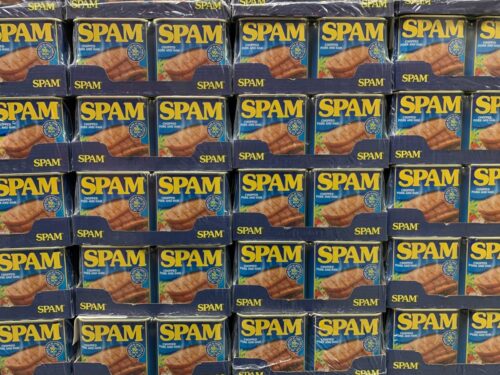
The term “spam” in email didn’t originally come from marketing at all. It traces back to a 1970s sketch from Monty Python’s Flying Circus in which the word “SPAM” (the canned meat from the SPAM brand) is repeated relentlessly on a restaurant menu and in chants until it overwhelms all other conversation. Thus, the Monty Python sketch popularized “spam” as something annoyingly repetitive (as canned meat was in England at the time). In the early days of the internet in the 1990s, people adopted the term for floods of repetitive, unwanted messages that disrupted normal communication. |
Top 10 Email Spam Triggers to Avoid
Before you hit send, it’s worth knowing what can make an email look like spam in the first place. Small wording choices, formatting habits, and technical issues can all affect whether your message reaches the inbox or gets filtered out. Let’s look at the 10 usual suspects.
1. Missing or Misconfigured Email Authentication
SPF, DKIM, and DMARC are no longer optional for reliable email delivery – they are effectively required by modern mailbox providers. Without proper alignment, mailbox providers can’t verify that your emails are legitimate.
Misconfiguration is just as harmful as a missing setup. A failing DKIM signature or a DMARC policy set incorrectly can quietly damage your sender reputation over time.
PS: alignment matters too! SPF, DKIM, and DMARC are essential, but alignment matters just as much. Make sure your “From” domain aligns with your DKIM and DMARC domains – this is key for passing stricter filters, especially with providers like Gmail and Microsoft Outlook.
| 🟣 If you want a deeper breakdown of how authentication plays into this, it’s worth revisiting this guide on email authentication. |
2. Poor Sender Reputation
Your email sender reputation is essentially your credit score in the email world. It’s built over time and influenced by:
- Spam complaints
- Bounce rates
- Engagement levels
- Sending consistency
Also, steer clear of sending too much all of a sudden. A sudden spike in volume (for example: sending once a month and then blasting daily, or jumping from 5,000 to 100,000 emails overnight) can quickly damage your reputation, and recovering from that may sadly be quite slow.
That’s why sending from a new domain or IP without a proper ramp-up can also hurt deliverability. Gradual “warm-up” builds trust with mailbox providers and helps establish a healthy sender reputation.
| 🟣 PS! You can monitor blocklists and feedback loops (FBLs), where available, to detect reputation issues early and respond before deliverability drops further. |
3. Sending to Cold or Purchased Lists
Purchased or scraped mailing lists are one of the fastest ways to land in spam folders.
These lists often contain:
- Spam traps
- Inactive users
- Invalid addresses
Even if a portion of the list is valid, low engagement alone can trigger filtering. Email providers interpret disengagement as a sign that your content is unwanted.

This is closely connected to how your list is originally built in the first place, which we’ll explore further in point #7.
Growing your mailing list may seem laborious at first, but in the end, it is more than worthwhile.
| 🟣 Read all about it from our article “Don’t Commit Subscrobbery With Buying Mailing Lists”. |
4. Ignoring Engagement Segmentation
Not all subscribers should receive the same content. Sending identical campaigns to both highly engaged users and inactive subscribers lowers your overall engagement rate—and that directly affects deliverability.
Segmentation and testing matter here. In fact, advanced A/B testing (like A/B testing for content and timing) can help you better understand how different segments respond.
For example, you might find that:
- Warm audiences respond better to long-form storytelling
- Cold segments prefer short, direct messaging
If you ignore these differences, disengaged users may start marking your emails as spam – because to them, it genuinely feels like spam.
5. Overuse of Spam Trigger Language
Classic spam words (“FREE!!!”, “ACT NOW”, “100% GUARANTEED”) still matter, but context matters more.
And as a matter of fact, modern filters don’t just flag individual words; they analyze tone, intent, and formatting patterns. Overly aggressive, sales-heavy language combined with poor engagement is what really triggers red flags.
PS! Spam filters also inspect links heavily. Too many redirects, link shorteners, or mismatched domains in your copy can hurt trust and increase the likelihood of messages being flagged as spam.
6. Unbalanced Email Design (Especially Images)
Emails that are heavily image-based with little supporting text can look suspicious to spam filters.
Here are some key factors to consider:
- Images without alt text reduce accessibility and context
- Large image files can negatively affect load time and user behavior
- Over-reliance on visuals can weaken the overall “trust signal” of the email
In fact, in email marketing, images in email marketing are never just decorative; they play a role in deliverability and engagement. A balanced text-to-image ratio still matters – not for aesthetics, but for trust signals.
PS: Optimize for plain-text readability! Over-designed HTML emails can trigger filters. Having a clean, simple version (or at least a well-structured HTML email) helps.
7. Poor Mailing List Acquisition Practices
How subscribers are added to your list has a direct impact on deliverability and engagement quality.
Low-quality acquisition methods often lead to:
- Fake or mistyped email addresses
- Low-intent subscribers
- High early disengagement rates
- Increased spam complaints from unrecognized senders
Even if your sending is technically correct, poor list quality signals to inbox providers that your audience may not genuinely want your emails.
That’s why double opt-in and clear consent-based signup flows are so important for long-term deliverability.
What to keep in mind:
- Always collect explicit consent
- Avoid aggressive or misleading signup forms
- Use double opt-in whenever possible
- Set clear expectations about email frequency and content
8. Weak or Misleading Subject Lines
Subject lines that overpromise and underdeliver can hurt you in two ways:
- Users mark your email as spam
- Users disengage over time

Both signals feed directly into spam filtering systems.
| 🟣 Get creative with subject lines when you know you’ve got the right public for those.
For such subject line tips, explore our articles: |
PS: The “From” name also plays a key role in inbox perception. People are more likely to mark emails as spam if they don’t recognize the sender, even if they technically opted in.
9. Poor Email Marketing Metrics
If your campaigns consistently show email marketing metrics such as:
- Low open rates
- Low click-through rates
- High unsubscribe or complaint rates
…then inbox providers interpret your emails as unwanted.
In other words, deliverability isn’t just technical – it’s behavioral. When users don’t engage, email providers assume your content isn’t relevant and gradually reduce your inbox placement.
Tracking and acting on email marketing metrics is, therefore, critical if you want to maintain strong deliverability over time.
10. Lack of List Hygiene
Keeping your mailing list clean is essential because it directly affects deliverability, sender reputation, and overall campaign performance.
Failing to maintain list hygiene leads to:
- Hard bounces
- Spam traps
- Dormant subscribers
A bloated list might look impressive, but it damages performance—and ultimately, deliverability. Regularly removing inactive users and managing cold segments is therefore essential.
NB! It’s also important to always include a clear unsubscribe mechanism. This is not only required by law in many regions but also acts as a positive deliverability signal. Bonus points if you support one-click unsubscribe, which is especially important for providers like Gmail.
| 🟣 For a deeper look at how to maintain a healthy list over time, see our article “The Beginner’s Guide to Mailing List Management.” |
Quick Checklist: Avoid These Email Spam Triggers
Modern deliverability isn’t just about “avoiding bad things” anymore; it’s also about proving you’re wanted. By steering clear of common pitfalls, you can even actively improve your deliverability – making inbox placement far more predictable and within your control.
Use this simple checklist to keep your email strategy clear of common email spam triggers:
- Ensure proper email authentication (SPF, DKIM, DMARC + alignment)
- Build and protect a strong sender reputation
- Avoid cold, purchased, or scraped mailing lists
- Segment your audience properly, also based on engagement
- Avoid overly aggressive or misleading language (and check links in your copy)
- Maintain a balanced text-to-image ratio in emails
- Use proper mailing list acquisition practices (double opt-in, consent-based signup, clear expectations)
- Write honest, relevant subject lines and ensure a recognizable “From” name
- Monitor email marketing metrics (open rates, click-through rates, unsubscribes, spam complaints)
- Maintain clean list hygiene, remove inactive users regularly, and allow people to easily unsubscribe
Conclusion
Avoiding spam folders today requires a holistic approach.
Inbox providers increasingly ask: “Do recipients actually value these emails?” If the answer is consistently “yes” (based on behavior), you’ll land in the inbox.
If your emails are relevant, expected, and engaging, inbox providers will reward you. If they’re ignored or flagged – even by a small segment – your entire program can suffer.
The takeaway is simple but demanding: deliverability is no longer just about compliance. It’s about consistently earning attention and trust. And that’s what separates average email marketing from truly high-performing programs.
Time to fix what’s holding your emails back. We’ll be here for you along the way!