


Email marketing promotions are one of the most effective tools for driving engagement and conversions, but not every offer works for every audience or moment in the customer journey.
Success isn’t just about “offering a discount.” It’s about matching the right incentive to the right customer motivation. Sometimes a percentage discount creates urgency. Other times, free shipping removes friction more effectively. And in loyalty campaigns, exclusive access or bonus rewards can outperform discounts entirely.
Modern email marketing has moved far beyond the classic “10% OFF” newsletter. Today, brands use a mix of discounts, rewards, gamified incentives, loyalty credits, digital bonuses, and experiential perks to boost conversions while protecting margins.
This article explores the most effective types of email marketing promotions and when each one works best.
1. Traditional Price Discounts
Traditional discounts still remain as the foundation of promotional email marketing because they are simple, easy to understand, and immediately valuable.
In practice, they come in several different forms, each designed to serve a specific type of campaign or customer need.
Sitewide Percentage Discounts
These are broad discounts applied as a percentage across an entire store or product range.
Examples:
- 10% off everything
- 20% off your entire order
- Weekend-only 25% discount
These work especially well for:
- Broad promotional campaigns
- Seasonal sales
- New collection launches
- Holiday campaigns
- Black Friday and Cyber Monday emails
Percentage discounts tend to feel more valuable on higher-priced products because customers mentally calculate larger savings.
For example:
- “30% off” feels compelling on a €300 product
- “€10 off” feels stronger on a €25 purchase
Overall, percentage discounts work best for fashion and lifestyle brands with higher average order values, large product catalogs, and campaigns tied to seasonal or promotional peaks.
Category-Specific Discounts
These target specific product categories or collections rather than the full catalog.
Examples:
- 20% off shoes
- Home office sale
- Beauty products buy-more-save-more
They work especially well when brands want to promote seasonal demand, clear excess stock, or align offers with customer interests based on browsing or purchase behavior.
In summary, these campaigns help:
- Promote overstock inventory
- Highlight seasonal categories
- Personalize offers by customer interest
- Avoid discounting the entire catalog
Category-focused campaigns also improve segmentation opportunities, as customer clicks reveal product preferences for future targeting.
First-Purchase Discounts
These are incentives designed to encourage a customer’s first purchase after subscribing or signing up.
Examples:
- 15% off your first order
- €10 welcome credit
- Free shipping for new subscribers
These are among the highest-performing email signup incentives because they immediately reward subscription behavior.
Common placements:
- Welcome emails
- Exit-intent popups
- SMS signup campaigns
- Lead magnet funnels
The key is balancing acquisition with profitability. Excessively aggressive first-order discounts can attract one-time bargain shoppers instead of loyal customers.
VIP & Member Discounts
These are exclusive offers reserved for loyal customers, subscribers, or membership tiers.
Examples:
- Exclusive member pricing
- Gold-tier rewards
- Loyalty member early access
- Subscriber-only discounts
VIP campaigns create exclusivity rather than just savings.
These work especially well for:
- Loyalty programs
- Subscription brands
- Communities
- Premium products
These email marketing promotions are most effective for retaining existing customers and reinforcing a sense of exclusivity, status, and belonging within a brand’s community. This works because people often value access and identity more than discounts alone, thereby strengthening long-term loyalty and increasing customer lifetime value.
All in all, “exclusive access” often outperforms larger discounts by appealing to identity rather than price.
2. Fixed Amount & Threshold Discounts
Fixed discounts communicate exact value clearly and often perform better for lower-cost purchases.
Fixed Amount Off Purchases
Examples:
- €10 off
- €15 voucher
- Save €25 today
These offers feel tangible and concrete.
Customers immediately understand the benefit without calculating percentages. Because of that, it works especially well with FOMO-based campaigns, where time (saving) and immediate clarity are decisive factors in customer behavior.
Best Use Cases
- Lower-priced products
- Mobile-first audiences
- Cart abandonment emails
- Retargeting campaigns
Threshold Discounts
Examples:
- €20 off €100
- Spend €150 and save €30
- Buy above €75 for a bonus gift
Threshold discounts are particularly valuable because they increase average order value.
They encourage customers to:
- Add more items
- Upgrade purchases
- Reach minimum spend goals
These campaigns are most effective in eCommerce, grocery delivery, beauty, and fashion retail businesses, where basket size optimization and add-on purchases are key growth drivers.
Progressive Discounts (“Buy More, Save More”)
Examples:
- Spend €50 → save 10%
- Spend €100 → save 15%
- Spend €200 → save 25%
Progressive discounts gamify spending behavior and can significantly increase basket sizes. This taps into the goal-gradient effect in psychology, in which customers become more motivated to put in effort as they approach a certain goal.
Using progressive discounts works especially well during holiday campaigns, inventory clearance, flash sales, and other high-volume eCommerce periods, where purchase intent is already strong and progressive rewards can meaningfully increase order value.

3. Seasonal & Event-Based Promotions
Talking about periods when buying intent is higher than usual – seasonal and event-based promotions naturally align with consumer buying intent.
Seasonal Discounts
Examples:
- Summer sale
- Back-to-school specials
- Holiday gift guides
- Valentine’s Day offers
These campaigns succeed because customers already expect promotional activity during these periods.
Major examples include:
- Black Friday
- Cyber Monday
- Christmas
- New Year
- Easter
- Mother’s Day
- Back-to-school season
Flash Sale Discounts
Examples:
- 24-hour sale
- 6-hour exclusive drop
- Midnight countdown deal
Flash sales rely heavily on urgency and scarcity psychology.
What amplifies results:
- Countdown timers
- Limited inventory messaging
- Expiring coupon codes
- Mobile push/email coordination
These campaigns often perform best with highly engaged subscribers, because they are already actively following the brand and are more likely to notice and act on time-sensitive offers.
Reactivation (“We Miss You”) Discounts
Examples:
- Come back and save 20%
- Your exclusive return offer
- Here’s a gift to welcome you back
Reactivation emails target inactive subscribers or customers who have not purchased recently.
PS! The offer should usually increase based on the inactivity length.
For example:
- 10% after 30 days
- 20% after 90 days
- Larger incentive for churn-risk customers
4. Free Shipping & Delivery Offers
Sometimes customers abandon purchases not because of product price, but because shipping costs create friction at the final step. That’s why delivery-related incentives have become one of the most effective ways to recover otherwise lost sales.
Common Delivery Incentives
These are delivery-related offers designed to remove friction at the point of purchase and make checkout feel easier and more attractive.
Examples:
- Free shipping codes
- Free same-day delivery
- Expedited shipping upgrades
- Free returns
- International shipping discounts
Free shipping often outperforms equivalent price discounts because consumers perceive shipping fees as “extra pain.”
Subscription Delivery Perks
These are ongoing delivery benefits tied to repeat purchases or subscription-based models that make long-term engagement more convenient and valuable.
Examples:
- Free recurring delivery
- Priority fulfillment
- Auto-renewal shipping benefits
These incentives are particularly effective for:
- Subscription commerce
- Consumable products
- SaaS merchandise
- Membership programs
5. Buy-One & Bundle Promotions
Bundle-based incentives increase perceived value while helping move inventory.
Buy One Get One (BOGO)
These are promotions in which customers receive an additional product for free or at a reduced price when they purchase one item.
Examples:
- Buy one, get one free
- Buy 2 get 1 free
- Second item 50% off
These campaigns create excitement because customers focus on “getting something extra” rather than simply saving money.
Bundle Pricing & Mix-and-Match Promotions
These are offers that encourage customers to purchase multiple products together, often at a discounted combined price.
Examples:
- Build your own bundle
- Any 3 for €50
- Mix-and-match collections
Bundles help:
- Increase average order value
- Cross-sell products
- Introduce new categories
- Reduce excess inventory
Free Add-On Products
These are bonus items given at no additional cost when a customer makes a purchase.
Some ideas:
- Free gift with purchase
- Complimentary accessories
- Surprise mystery item
Free gifts can sometimes outperform direct discounts because they add value without making the product feel cheaper.
Luxury brands often prefer this strategy over heavy discounting, because it enhances perceived value without devaluing the product or weakening the brand image.

6. Loyalty, Credits & Reward-Based Incentives
Not every campaign needs to offer straight monetary discounts – many brands are now increasingly turning to loyalty mechanics as a warm way to encourage customers to keep coming back and engaging more.
Meaning, these kinds of email marketing promotions are the epitome of “thinking ahead”.
Loyalty Point Credits
Examples:
- Double points weekend
- Bonus rewards
- 500 extra loyalty points
These campaigns are excellent for:
- Existing customers
- Retention programs
- Subscription ecosystems (businesses where customers pay on a recurring basis, like monthly or yearly)
Bonus points feel less financially painful to brands than direct discounts while still motivating purchases.
Store Credit Vouchers
Examples:
- €20 store credit
- Cashback credit
- Future purchase rewards
Store credits encourage repeat visits and future purchases rather than one-time discount behavior.
Referral Reward Credits
When it comes to growing your customer base, referral rewards encourage existing customers to introduce your brand to new potential buyers – creating a win-win situation where the brand gains exposure and the customer receives a valuable reward.
Examples:
- Refer a friend and earn €15
- Share-and-earn campaigns
- Give €10, get €10
Referral programs work especially well in:
- SaaS
- Subscription products
- Beauty
- Fitness
- eCommerce memberships
Birthday & Anniversary Rewards
Examples:
- Gift cards in birthday emails
- Anniversary discounts
- Birthday month perks
These campaigns feel highly personal and often achieve excellent engagement rates because they are tied to customer identity rather than mass promotion.
7. Free Products, Content & Digital Bonuses
Value does not always need to come from discounts or rewards – it can also be tangible, educational, or experiential.
Free Samples & Complimentary Products
Examples:
- Product testers or free product giveaways
- Trial-size products
- Complimentary accessories
These campaigns are particularly effective for:
- Beauty
- Food
- Supplements
- Luxury products
Digital Freebies
Examples:
- Free ebooks
- Templates
- Downloadable guides
- Research reports
- Educational courses
These work especially well in B2B email marketing and SaaS funnels because they provide immediate value while supporting lead nurturing.
Insider Content Access
Examples:
- Exclusive webinars
- VIP newsletters
- Early product previews
- Premium educational content
This strategy builds community and authority rather than relying entirely on discounts.
| 🎓 PS! If you’re promoting a webinar and looking to boost registrations, then check out our article “Webinar Email Marketing: Successfully Promoting Your Webinar With Emails”! |
8. Subscription & SaaS Incentives
Subscription and SaaS businesses often use incentive structures differently from eCommerce brands.
Common SaaS Incentives
Examples:
- Free trial periods
- Extended trial access
- First month free
- Upgrade bonuses
- Feature unlocks
- Annual plan discounts
- Account credits
SaaS promotions usually focus on reducing adoption friction rather than discounting the core product permanently.
9. Event & Experience-Based Rewards
Experiential rewards create emotional engagement beyond transactional value.
Examples:
- Free webinar tickets
- Event discounts
- VIP access invitations
- Meet-and-greet opportunities
- Private community access
These are especially powerful for:
- Coaches
- Content creators and bloggers
- Conferences
- Membership communities
- Premium lifestyle brands

10. Gamified & Interactive Promotions
Email gamification adds entertainment and curiosity to promotional emails.
Popular Gamified Campaigns
Examples:
- Spin-to-win offers
- Scratch card reveals
- Mystery discounts
- Daily unlock rewards
- Quiz-based rewards
- Treasure hunt campaigns
These campaigns increase:
- Click-through rates
- Time spent engaging
- Social sharing
- Repeat opens
Gamification works particularly well for younger audiences and mobile-heavy customer bases.
| 🎓 To learn more about the how-tos of gamification, read our blog article “Email Marketing Gamification: Best Practices”! |
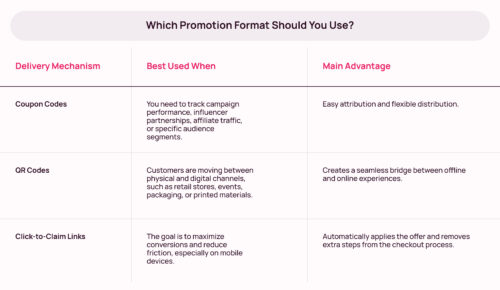
11. Coupon Codes, QR Codes & Click-to-Claim Offers
The delivery mechanism matters just as much as the incentive itself.
Coupon Codes
Traditional and versatile:
- SAVE20
- WELCOME15
- VIPACCESS
Useful for:
- Tracking campaign attribution
- Affiliate marketing
- Influencer partnerships
QR Codes
Increasingly popular in:
- Mobile campaigns
- Retail stores
- Omnichannel marketing
- Event promotions
Click-to-Claim Links
These links reduce friction dramatically by automatically applying promotions without requiring manual code entry.
Especially effective for:
- Mobile eCommerce
- Cart recovery
- Flash sales
Percentage Discounts vs Fixed-Amount Discounts: Which Works Better?
The wording of an offer is what significantly affects customer perception.
“30% Off” vs “€30 Off”
Both may represent the same value, but psychologically, they feel different.
Percentage Discounts Work Better When:
- Products are expensive
- Customers expect premium pricing
- You want the discount to appear larger
Example:
- “30% off luxury furniture” feels substantial
Fixed-Dollar Discounts Work Better When:
- Products are inexpensive
- Customers prefer clarity
- Mobile users need immediate understanding
Example:
- “€10 off your next purchase” feels direct and tangible
Threshold-Based Messaging
In addition to traditional discounts, threshold-based offers encourage customers to increase their order value to qualify for a reward. The wording should clearly communicate both the spending requirement and the benefit being unlocked.
Offer examples:
- Spend €100, save €20
- Unlock a free gift at €150
Threshold messaging works because customers mentally justify adding extra items to “earn” the reward.
Bonus-Based Messaging
Rather than focusing on savings alone, bonus-based offers emphasize the extra value customers receive. The wording should highlight the reward itself, creating a more positive and premium-feeling experience.
Offer examples:
- Get a free gift with purchase
- Earn bonus points today
- Unlock VIP perks
Bonus-oriented wording actually often feels more positive and rewarding than discount-heavy messaging.
This is especially important for premium brands trying to avoid appearing overly promotional.
Matching Promotions to Customer Segments
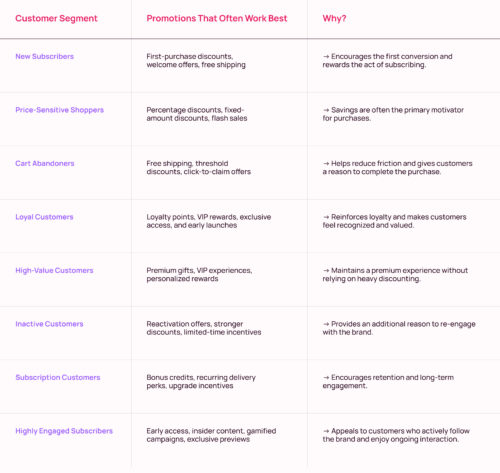
While wording and offer structure matter, the most effective email marketing promotions are usually those that align with their audience. Different customer segments are motivated by different types of value, so the same offer can yield very different results depending on who sees it.
The table below provides a general framework for matching incentives to common customer groups:
Final Thoughts
The most effective email marketing promotions are not about offering bigger discounts, but about choosing the right incentive for the right moment in the customer journey. As this guide has shown, value can take many forms – from savings and free shipping to loyalty rewards, exclusivity, and added experiences.
When brands move beyond one-size-fits-all offers and align incentives with customer motivations, email becomes far more than a sales channel. It turns into a tool for relevance, connection, and long-term growth.
Here’s to email marketing promotions that meet customer expectations – and drive your sales goals!